EN
EN



Why Accurate Temperature Monitoring Is Critical for Aquarium Health
Getting the water temperature right makes all the difference when it comes to keeping fish healthy. Their immune systems, metabolism, and stress levels are really sensitive to temperature changes. For tropical fish such as discus, they need pretty consistent warmth around 82 to 88 degrees Fahrenheit. Goldfish, on the other hand, do better in cooler waters between about 68 and 74 degrees. If the temperature swings more than 2 degrees in a day, fish start producing cortisol which weakens their immune defenses and makes them 40% more likely to get sick according to some recent studies in Aquatic Veterinary Journal. Warmer water actually holds less oxygen, roughly 30% less than colder water, and this can make ammonia problems worse too. The filters in aquariums work less well when temperatures drift away from what's ideal. Every 4 degree change knocks about 15% off filter performance, which could lead to serious problems in the tank ecosystem. Regular manual testing just isn't enough to catch those nighttime dips or equipment malfunctions. That's why good digital sensors are so important for constant monitoring and avoiding expensive losses of aquatic life.
Top Aquarium Accessories Tools for Precise Temperature Measurement
Digital Submersible Thermometers: Accuracy, Placement, and Calibration
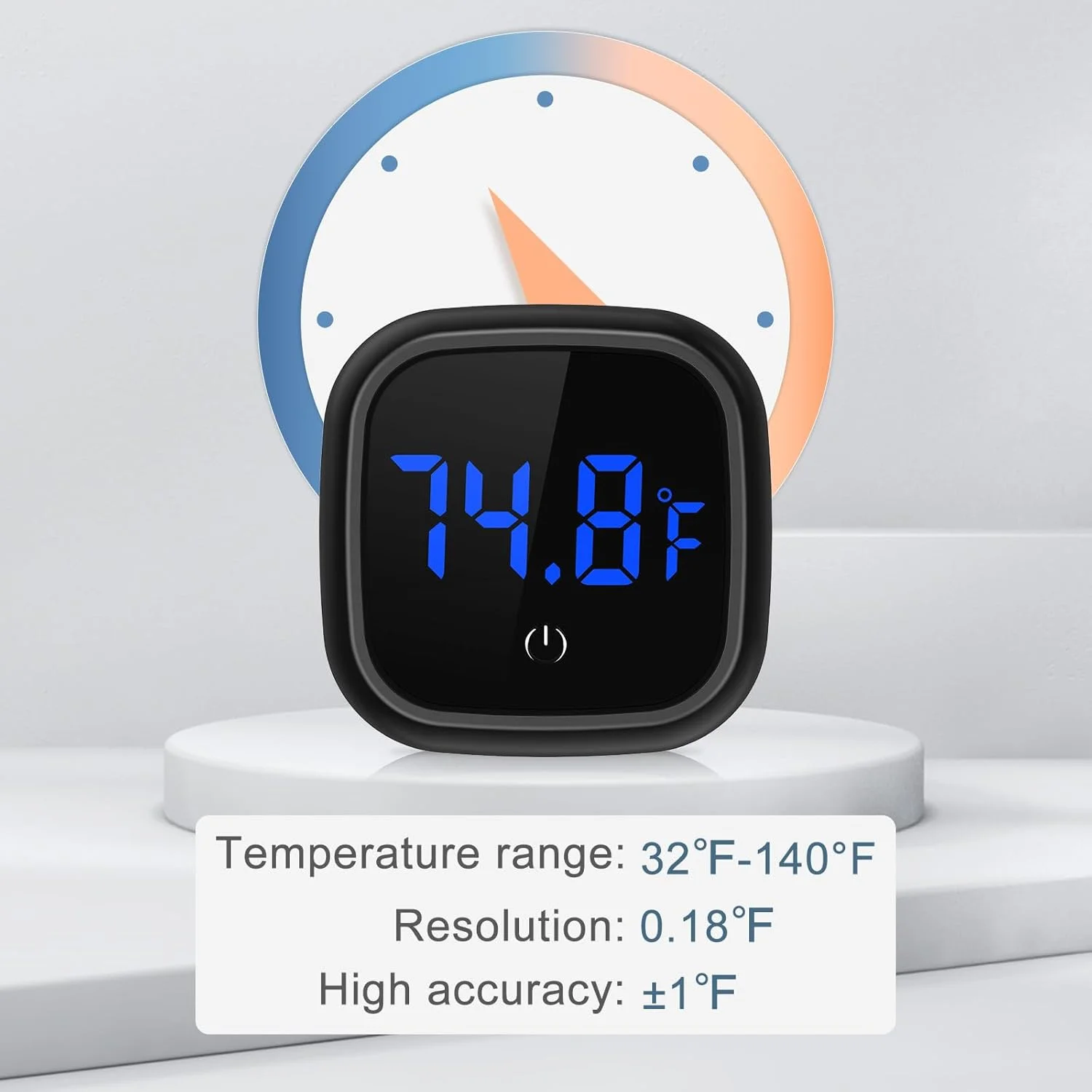
Submersible digital thermometers give ongoing water temp checks with around half a degree Fahrenheit accuracy if they get calibrated every three months or so. For best results, put the sensors close to heating units or areas where water moves around, but stay away from spots hit by direct sun or right next to filters since those can mess with the readings. Getting them calibrated against proper reference thermometers stops drift from happening. This matters a lot because studies show that nearly two-thirds of all temperature problems in aquariums come from thermometers that haven't been properly calibrated according to Aquatic Journal research last year. These instruments really make a difference for maintaining stable conditions underwater.
- Instant digital displays visible across rooms
- Waterproof designs for full submersion
- Battery life exceeding 18 months
Infrared Thermometers vs. Smart Wireless Sensors: Use Cases and Limitations
Infrared thermometers measure surface temperatures quickly but cannot penetrate glass or water, making them unsuitable for submerged readings. Conversely, smart wireless sensors track core water temperatures 24/7 with mobile alerts for fluctuations exceeding ±2°F. Key considerations:
| Feature | Infrared Thermometers | Wireless Sensors |
|---|---|---|
| Measurement Depth | Surface only | Full water column |
| Alerts | None | Real-time phone/email |
| Best For | Spot checks | Continuous monitoring |
While infrared guns work for quick glass-surface scans, smart sensors integrate with automated systems to trigger heater shutdowns during failures—preventing 92% of temperature-related fish losses (Aquaculture Safety Report 2023).
Smart Aquarium Accessories Tools with Real-Time Alerts and Data Logging
Wi-Fi and Bluetooth-Enabled Monitors for Remote Temperature Tracking
Wi-Fi and Bluetooth connected monitors keep tabs on water conditions all day long, sending alerts straight to smartphones whenever something goes outside normal parameters. This means tank owners can jump in fast before heat issues start stressing out fish and plants. Take it from experience: if a heater breaks down suddenly and temps spike, most smart systems will notify users within just a few seconds. But the real value comes after those initial warnings. These devices also record everything over time, so hobbyists can spot patterns they might miss otherwise—daily ups and downs or slow changes in equipment performance. Looking at this data helps figure out where heaters should go and when regular maintenance becomes necessary. For anyone who travels regularly, having this kind of system installed gives serious mental relief, knowing that even when away, there's still someone watching over the tank and preventing disasters that could have been avoided.
Integrated Monitoring Systems: Combining Temperature with Key Water Parameters
Aquarium monitoring systems have really taken things to another level when it comes to tech for keeping tanks healthy. These systems combine temperature readings with important water chemistry factors such as pH balance, dissolved oxygen content (DO), and electrical conductivity measurements. Looking at all these numbers together gives aquarists a much better picture of what's going on inside their tanks. The truth is, these different parameters don't exist in isolation. When temperatures go up or down even slightly, it affects how fast fish metabolize food and expend energy. At the same time, changes in dissolved oxygen levels tend to mess with pH stability over time. Take a simple scenario where water warms by just 1 degree Celsius. That small change actually reduces oxygen availability in the water by around 2 to 3 percent. Left unchecked, this kind of shift puts real stress on fish and other aquatic creatures living in the tank.
Today's monitoring systems can actually connect different data points to spot problems before they become serious issues. For instance, if water temperatures go up while dissolved oxygen levels drop, this often means there's either an algae problem or too many animals in the tank. The same goes for sudden jumps in conductivity when heating occurs—usually a sign that salt concentrations are increasing as water evaporates. Keeping track of these connections helps avoid major system failures. Some studies have found that aquaculture operations using multiple sensors together see about a third less animal deaths than those relying only on basic temperature checks. Makes sense really—knowing what's happening across several parameters gives operators a much better picture of overall tank health.
These systems often feature:
- Automated alerts for parameter deviations
- Data logging to identify trends (e.g., nightly pH drops)
- Cloud integration for remote oversight
By synthesizing temperature with chemical and biological indicators, aquarists gain predictive insights—transforming reactive fixes into proactive habitat management while ensuring optimal conditions for sensitive species like coral reefs, which require ±0.5°C stability.
FAQ
Why is temperature important for aquarium fish?
Temperature is crucial because it affects fish metabolism, immune systems, and stress levels. Incorrect temperatures can weaken immune defenses and increase chances of illness.
How do I maintain the correct temperature in my aquarium?
Utilize digital submersible thermometers, smart wireless sensors, or Wi-Fi/Bluetooth-enabled monitoring systems to ensure consistent and accurate temperature tracking.
What are the benefits of integrated monitoring systems?
Integrated systems combine temperature with key water parameters to provide predictive insights, enabling proactive habitat management and reducing stress on aquatic life.