EN
EN



When to Clean Your Aquarium Filter Cartridge
Maintaining optimal aquarium health requires recognizing precise cleaning triggers for your filter cartridge. Ignoring these signs risks water quality degradation and ecosystem imbalance.
Pressure Differential Triggers: Recognizing the 8–10 PSI Rise
Monitor pressure gauges weekly—a sustained 8–10 PSI increase indicates critical clogging. This 20–30% flow resistance benchmark signals trapped debris compacting filtration media. At this stage, cartridges lose ~40% filtration efficiency, forcing pumps to overwork and accelerating wear on internal components.
Visual and Operational Cues: Flow Rate Drop, Cloudy Water, and Cartridge Discoloration
Observe three tangible indicators daily:
- Flow reduction: Water output decreasing 25% from baseline
- Hazy water: Persistent cloudiness despite water changes—often signaling bacterial blooms fueled by trapped organics
- Media darkening: Cartridge fabric turning deep brown or black with accumulated detritus
These symptoms collectively confirm biological filtration compromise. Delayed cleaning beyond this point allows ammonia concentrations to spike up to 500% within 72 hours—reaching lethal levels for most fish and invertebrates. Proactive identification prevents catastrophic system failure.
Safe, Effective Cleaning Methods for Aquarium Filter Cartridges
Rinsing Best Practices: Low-Pressure Tap Water and Optimal Angle to Preserve Media Integrity
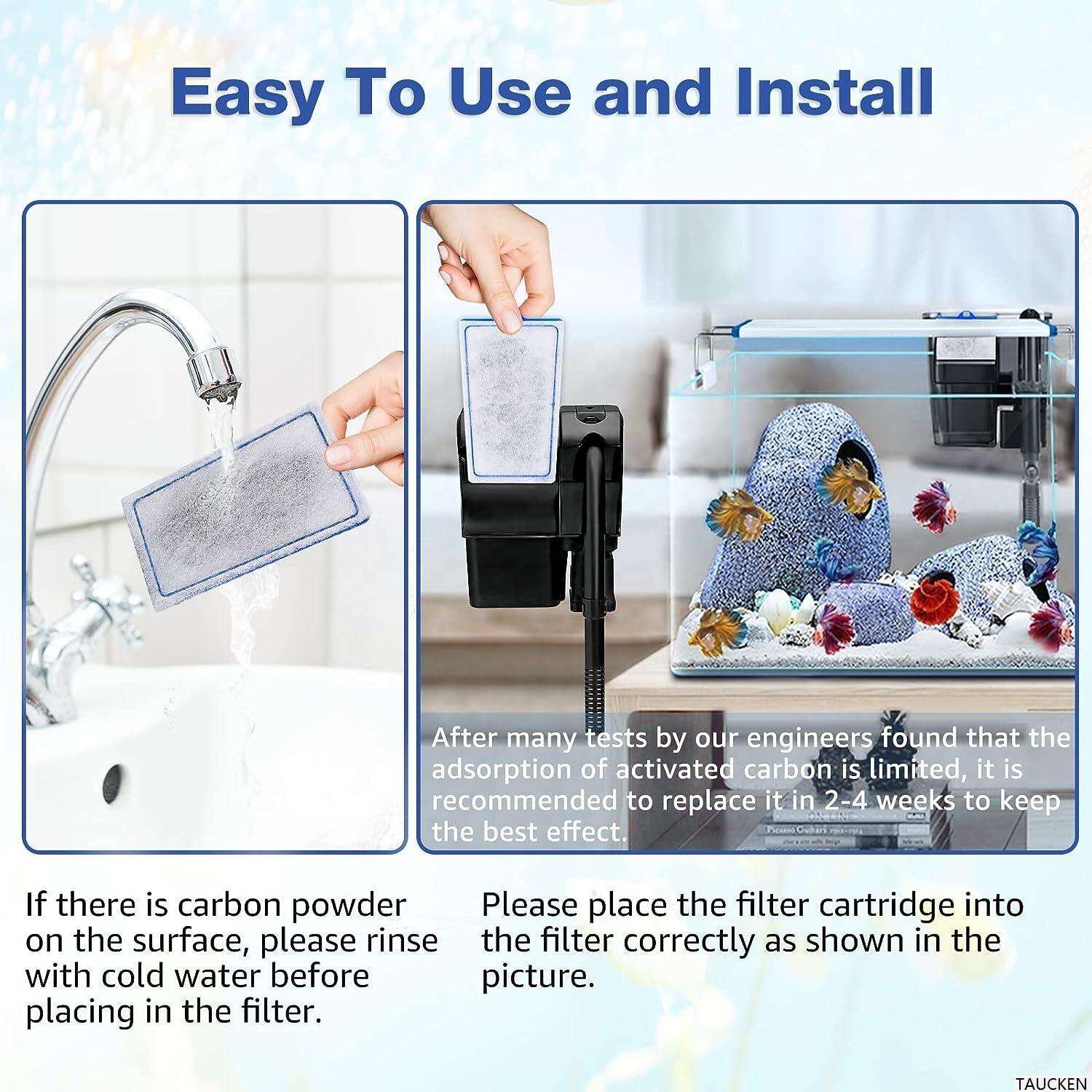
When cleaning filter cartridges, run them under cold tap water at around a 45 degree angle. This helps wash away debris without messing up the important bio media inside. Hot water or anything with high pressure will actually destroy those good bacteria colonies and damage the carbon layers we need for proper filtration. If tap water is all that's available, definitely add some dechlorinator first. Even better? Use water from the old tank during regular water changes. The reason? It already matches the pH level, temperature, and minerals in the system which keeps those bacteria happy longer than just plain tap water ever could. For really stuck on particles, gently work them loose with the palm of your hand but be careful not to tear apart any of those delicate fiber layers in the media.
Chemical Soaks Compared: Vinegar vs. TSP – Efficacy, Safety, and Impact on Beneficial Bacteria
For stubborn mineral deposits, choose between vinegar or trisodium phosphate (TSP) solutions:
| Factor | Vinegar (5% acetic acid) | TSP Solution |
|---|---|---|
| Efficacy | Moderate; requires 1–2 hour soak | High; dissolves scale in 30 min |
| Safety | Non-toxic; no residue after rinsing | Toxic; demands triple rinsing |
| Bacteria Loss | Kills 40–60% of colonies | Eliminates ~90% of colonies |
Don't ever soak those whole bio-media cartridges in water. The bacteria colonies need time to recover, so it's better to clean just half at a time or spread out maintenance between different filters when possible. When dealing with parts that have been chemically treated, make sure to give them a good rinse under running water for around five minutes before putting everything back together. This helps keep harmful substances from getting released into the system later on. Some tests show that media cleaned with vinegar actually recovers about twice as fast as stuff washed with TSP. Makes sense since vinegar is generally gentler on biological systems while still getting rid of buildup effectively.
Critical Mistakes to Avoid When Cleaning Your Aquarium Filter Cartridge
Why Bleach, Pressure Washers, and Washing Machines Destroy Filtration Media and Crash Biological Balance
Using bleach kills off those good bacteria that keep the nitrogen cycle running properly, plus it leaves behind stuff that's bad for fish and other water creatures. Those pressure washers basically tear apart the fine filter materials inside, doing real damage that can't be fixed later on and messing up how the mechanical filtration works. Putting filter cartridges through washing machines is just asking for trouble too. The constant shaking around combined with all that soap ends up destroying both the tiny holes in the filters and the little microbes that do important work. According to some research from the Aquatic Health Journal last year, about 58 out of every 100 aquarium problems start because people cleaned their filters wrong. Want to keep things healthy? Just give them a quick rinse in old tank water or something without chlorine instead. Stay away from strong cleaners, high pressure sprays, or anything else that stresses out the filter parts.
Reinstalling and Optimizing Performance After Cleaning
O-Ring Lubrication, Air Bleed Verification, and Secure Clamp Reassembly
Getting the reassembly right means no leaks and keeps those good bacteria alive in the tank. Start with a thin coat of aquarium safe silicone on that O ring. It stops it from cracking and makes sure there's a solid seal against water escaping. When putting everything back together, run the filter for a moment while gently tapping the sides of the housing. This helps get rid of any air bubbles stuck inside. If the water coming out looks cloudy, that usually means there are still bubbles trapped somewhere. Tighten all the clamps just enough so they feel snug but not crushed. A good rule of thumb is finger tight plus maybe another quarter turn. The whole process can boost water flow anywhere between 25% to 40% better than if things were put back wrong. Before calling it done, check that water flows smoothly and consistently throughout the system. No sudden stops or weird patterns mean everything is working properly.
FAQ
How often should I clean my aquarium filter cartridge?
It's recommended to check the filter and clean as necessary when you notice pressure differential triggers, a 25% drop in flow rate, or visible discoloration. Regular monitoring and maintenance are key to preventing ecosystem imbalance.
Can I use vinegar to clean stubborn mineral deposits?
Yes, vinegar is a safe option for cleaning mineral deposits. However, note that it kills around 40–60% of beneficial bacteria, but recovery is faster compared to using harsher chemicals like TSP.
Why is it not recommended to use bleach or pressure washers?
Bleach and pressure washers can destroy beneficial bacteria and damage the filter media, compromising system balance and filtration efficiency.