EN
EN



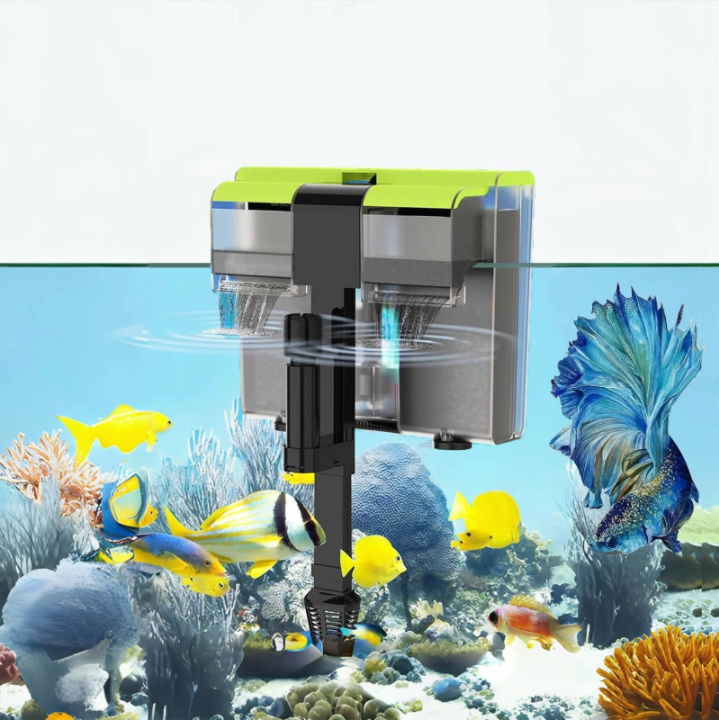
The Science Behind Aquarium Filtration Efficiency
Defining Filtration Efficiency and Its Role in Aquarium Health
The efficiency of a filtration system basically tells us how good it is at getting rid of bad stuff from the tank water without messing up the overall water quality. Good filters can take out around 95 to almost all of those tiny particles floating around (anything smaller than 50 microns really), and they convert ammonia pretty well too, usually knocking down about 90% in established biological filters. Fish tend to stay healthier when their environment has proper filtration going on. Some research actually found that tanks with top notch filtration had roughly half as many sickness issues as tanks where the filtering wasn't so great according to data from National Aquarium Institute back in 2023.
How Influencing Factors Shape Long-Term Tank Stability
When it comes to how well filters work, there are basically three main factors that matter most: flow rate measured in gallons per hour (GPH), the amount of surface area available on the media, and how well bacteria can colonize the filter material. Filters that have at least 300 square feet of porous media tend to process ammonia about 40 percent quicker compared to those simple sponge filters because they provide space for bigger colonies of beneficial bacteria to grow. But watch out if the water moves through too fast though. If the flow goes above eight times the total tank volume each hour, the water doesn't stay in contact long enough with the filter media. This actually cuts down on how effectively toxins get removed from the water, sometimes by as much as 25 to 30 percent especially when dealing with tanks that have lots of biological waste.
The Interplay Between Mechanical, Biological, and Chemical Filtration
Modern aquarium filters integrate three complementary processes:
- Mechanical filtration traps debris such as uneaten food, which accounts for 15-20% of tank waste.
- Biological filtration relies on nitrifying bacteria to process 0.5-2 ppm of daily ammonia.
- Chemical filtration removes dissolved organics using activated carbon or ion-exchange resins.
Test data reveals a canister filter with multi-stage media maintains nitrate levels below 20 ppm for 78% longer than single-stage units by optimizing this synergy. Well-balanced systems sustain ammonia below 0.25 ppm and nitrite below 0.5 ppm, critical thresholds for tropical fish survival.
Biological Filtration: Beneficial Bacteria and the Nitrogen Cycle
The Core Role of Beneficial Bacteria in the Nitrogen Cycle
Good bacteria make biological filtration work by turning the toxic ammonia from fish waste and rotting food into something much safer called nitrates. This happens as part of the nitrogen cycle process. First, Nitrosomonas bacteria get busy changing ammonia into nitrites, then Nitrobacter takes over and turns those nitrites into nitrates. These little workers love hanging out on rough surfaces inside aquarium filters and gravel beds. When conditions are right, especially with enough dissolved oxygen (at least 5 parts per million), one gram of filter media might actually contain around 10 billion of these helpful microbes. That's why having plenty of surface area and keeping water well-oxygenated matters so much for maintaining healthy bacterial colonies.
Nitrification Efficiency in Biofilters and Ammonia Conversion Rates
The success of nitrification really hinges on three main factors: how many bacteria are present, the level of dissolved oxygen in the system, and the overall water flow rate. When everything lines up just right, high quality biofilters can knock out about 85 to 90 percent of ammonia within a single day, provided there's enough contact time between the water and the media - usually around four to six hours works best. Things start going downhill pretty quickly though once the dissolved oxygen concentration dips below 3 parts per million. That's when the nitrifying bacteria literally run out of breath and stop working properly. Most manufacturers spend considerable time developing their media formulations. They need something that offers plenty of surface area for bacterial growth (at least 300 square meters per cubic meter is ideal) while still resisting blockages from debris buildup. This careful balancing act helps maintain steady ammonia processing rates even when faced with average levels of biological load.
Impact of Ammonia Concentration on Nitrification Activity
Beneficial bacteria need ammonia to survive, but too much becomes problematic. When concentrations go over 2 parts per million, these microbes get overwhelmed and stop working properly, which means less nitrification occurs. Research from aquaculture in 2023 showed something interesting: if ammonia stays above 1.5 ppm for three days straight, nitrification drops around 40%. The actual point where things break down depends on water conditions though. Warmer waters, say anything above 28 degrees Celsius or 82 Fahrenheit, actually make ammonia more toxic to aquatic life. That's why many pond keepers test their systems regularly, aiming to keep ammonia under 0.5 ppm so the good bacteria can do their job without being stressed out. Maintaining these lower levels ensures the whole ecosystem stays balanced and healthy over time.
Controversy Analysis: Over-Cleaning and Disruption of Bacterial Colonies
Too much filter maintenance can actually mess up the nitrogen cycle in aquariums. When hobbyists replace all their filter media at once, they often wipe out between 70 to maybe even 90 percent of those helpful nitrifying bacteria, which might lead to what people call a "cycle crash." A better strategy seems to be doing staggered cleanings where only about a third of the media gets serviced each month. This helps keep those bacterial colonies intact. Of course, there are folks who will tell anyone who'll listen that not cleaning enough causes problems too - stuff builds up, water flow slows down, and so on. So really, the sweet spot appears to be checking things regularly while only doing partial cleanings when needed. Most experienced aquarists find this middle ground works best for maintaining stable conditions without killing off beneficial microbes.
Filter Media Type and Its Effect on Filtration Performance
Comparing common media: filter floss, sponge, bio rings, activated carbon
Regular filter floss does a decent job catching those tiny particles, around 85 to 90 percent efficiency mechanically speaking, though it tends to get clogged pretty fast which can be frustrating. Porous sponge materials work differently they actually do two things at once mechanical filtering plus creating spaces where beneficial bacteria can hang out and multiply. Speaking of bacteria, bio rings are amazing little gadgets offering somewhere between 800 and 1200 square feet per gallon of surface real estate, making them perfect homes for those nitrifying bacteria we all need in our systems. Activated carbon is great stuff for getting rid of dissolved organic compounds, usually lasts about three weeks give or take before it starts losing effectiveness. And then there's high end synthetic stuff like nanofiber media these babies claim to catch nearly every single particle with their 99.99% retention rate, but honestly most hobbyists won't have access to the special housing equipment needed to make them work properly in typical setups.
Surface area and porosity: how media design affects bacterial colonization
Media geometry significantly influences biological filtration capacity. Materials with submicron pores increase beneficial bacteria populations by 40% compared to standard sponge media. Wavy bio ball designs outperform smooth ceramic rings, sustaining 15% higher nitrification rates in controlled trials.
Long-term degradation and replacement schedules for different media types
| Media Type | Degradation Timeline | Efficiency Loss Pattern |
|---|---|---|
| Filter Floss | 28 days | Progressive clogging (10%/week) |
| Ceramic Media | 18-24 months | Mineral buildup (3%/month) |
| Activated Carbon | 30 days | Rapid adsorption depletion |
Replacing mechanical media every four weeks and inspecting biological media annually prevents sudden efficiency losses exceeding 25%.
Case Study: Canister filter with multi-stage media vs. basic sponge setup
A 12-week trial comparing 50-gallon cichlid tanks revealed that multi-stage filters (mechanical - biological - chemical layers) maintained ammonia below 0.25 ppm, while sponge-only systems reached 1.5 ppm. The layered configuration reduced nitrate accumulation by 60% and operated at 22% lower flow resistance, demonstrating that structured media enhances both mechanical and biological performance.
Matching Filter Capacity to Aquarium Size and Bioload
Matching Flow Rate (GPH) to Tank Size Considerations
A filter's flow rate should process 4-5 times the tank's volume per hour—for example, a 30-gallon tank needs a 120-150 GPH filter. Research from industry testing shows underpowered filters struggle with debris removal, while excessive flow can stress fish.
Hydraulic Loading Rate and Its Effect on Contact Time and Efficiency
Hydraulic loading rate—the speed water moves through media—affects contaminant removal. A 2022 University of Florida study found slow-flow systems (<0.5 GPH per liter) achieved 92% ammonia removal versus 67% in high-flow setups (>1 GPH per liter). Slower flow increases contact time, enhancing toxin processing by beneficial bacteria.
Undersized Filters in Overstocked Tanks: A Common Cause of Failure
Overcrowding drastically increases bioload—a 20-gallon tank housing 5 goldfish generates significantly more waste than one with 15 neon tetras. Manufacturer data indicates 78% of filters fail within six months when handling twice their rated bioload, often due to clogged media or bacterial die-offs.
Bioload Fundamentals: How Fish Species and Feeding Affect Waste Output
Bioload varies by species: herbivores like mollies produce 30% more waste than carnivores such as bettas due to plant-based diets (Aquatic Biology Report, 2024). Overfeeding raises dissolved organic levels by 55% within 72 hours, overwhelming mechanical filtration. Use the 1-inch-per-gallon rule as a starting point, adjusting for species-specific waste output.
Maintenance Practices That Sustain Long-Term Filtration Efficiency
Importance of Regular Maintenance in Sustaining Filtration Efficiency
Neglected filter maintenance reduces contaminant removal by 40-60% within six months (Ponemon 2023). Clogged media restricts flow, forcing pumps to work 30% harder and shortening equipment life. Biweekly inspections reduce ammonia spikes by 78% in tropical freshwater tanks.
Filter Media Replacement and Cycling Risks
Replacing all media at once can eliminate up to 90% of beneficial bacteria, risking a cycle crash. Protect biofilms by:
- Rinsing mechanical media in tank water only
- Retaining half of biological media during upgrades
- Avoiding tap water, which contains chlorine that kills nitrifying bacteria
Strategy: Staggered Cleaning to Preserve Beneficial Bacteria
Industry research demonstrates that phased cleaning preserves bacterial stability:
- Week 1: Rinse coarse sponge
- Week 3: Replace filter floss
-
Week 5: Vacuum substrate near intake
This method prevents debris accumulation while safeguarding microbial colonies.
Water Parameters as Indicators of Filter Strain
Weekly testing detects early signs of filter failure:
| Parameter | Healthy Range | Stress Threshold | Immediate Action |
|---|---|---|---|
| Ammonia | 0 ppm | >0.25 ppm | Check filter flow |
| Nitrite | 0 ppm | >0.5 ppm | Add bio media |
| Nitrate | <40 ppm | >80 ppm | Partial water change |
| Elevated nitrite levels specifically indicate compromised nitrification in biological media. |
FAQ
What is the role of beneficial bacteria in aquarium filtration?
Beneficial bacteria in aquariums play a crucial role in biological filtration by converting toxic ammonia, produced from fish waste and decaying food, into safer nitrates through a process known as the nitrogen cycle.
How does over-cleaning affect aquarium health?
Over-cleaning can disrupt the nitrogen cycle by wiping out a significant percentage of nitrifying bacteria, which can lead to a cycle crash, destabilizing water conditions.
Why is it important to match the filter capacity to aquarium size?
Matching filter capacity to aquarium size ensures adequate water flow and contact time with filter media, preventing stress on fish and ensuring efficient waste removal.
What are the best practices for maintaining filtration efficiency?
Regular maintenance, including biweekly inspections, staggered cleaning, and careful media replacement, sustains filtration efficiency by preserving beneficial bacterial colonies and preventing clogging.